
7 early literacy activities for toddlers using everyday objects
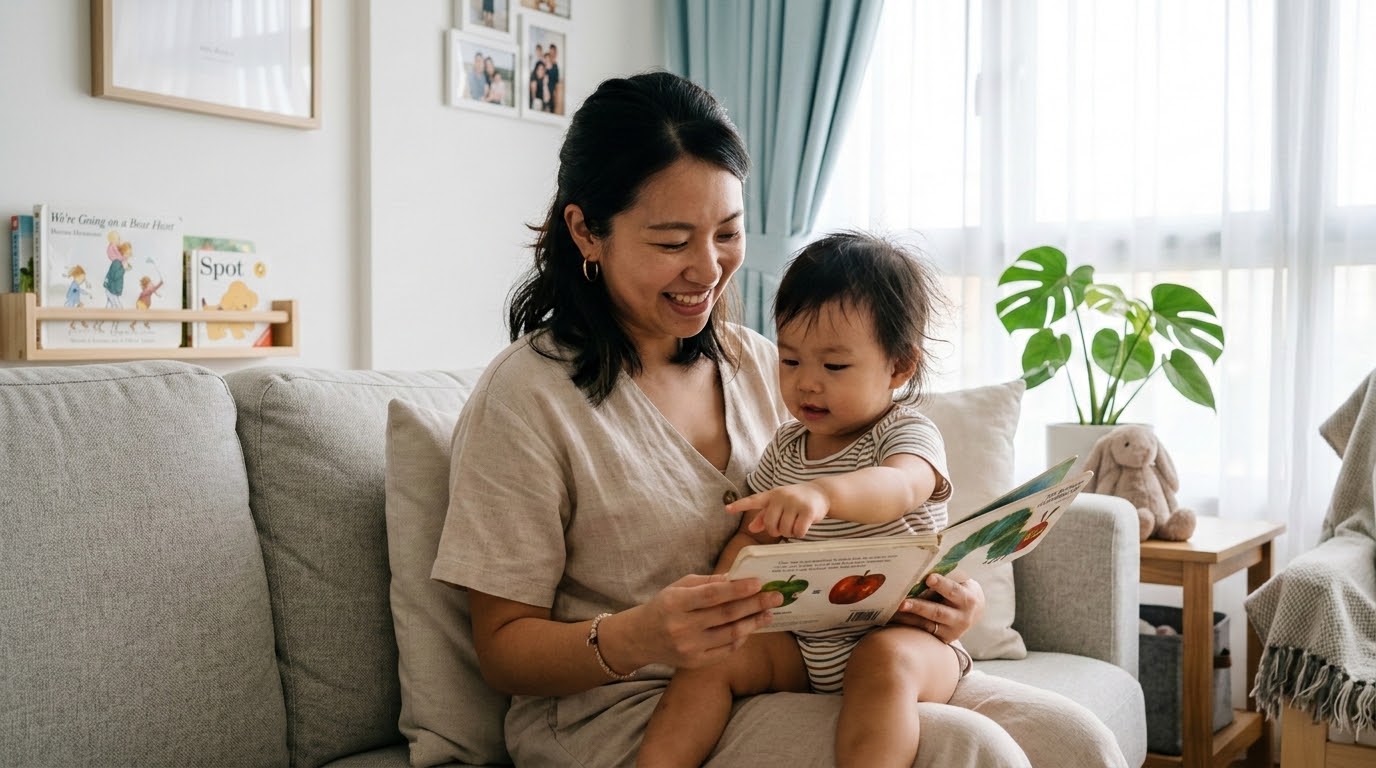
Early literacy starts before a child can read. It includes the experiences that help children make sense of language, pictures, sounds, stories and symbols. For a toddler, this can look like pointing to a familiar object in a book, finishing a repeated phrase, pretending to write or asking for the same story again.
The American Academy of Pediatrics' (2024) Literacy Guidance supports shared reading from infancy because it can strengthen language, cognitive and social-emotional development while supporting the caregiver-child relationship. UNESCO marks International Literacy Day every 8th of September, offering families a useful reminder that literacy grows through everyday participation.
These seven early literacy activities for toddlers use materials many families already have. Follow your child's attention, repeat what they enjoy and keep the interaction warm.
1. Make a family photo story
Choose four to six photos from a familiar day. They might show breakfast, a walk, bath time or visit a grandparent. Place them in order on your phone or print them on paper.
Tell a simple story: "First, we put on shoes. Then, we walked outside. We saw a dog." Pause so your child can point, make a sound or add a word. Repetition helps the child connect images with events and language.
To extend the activity, mix two photos and ask which one came first. The answer can be given through pointing.

2. Read the room
Environmental print includes labels, signs, packaging and symbols children see in daily life. Walk around one room and notice what is already there. Point to a cereal box, soap bottle, family name label or appliance symbol.
Say what the item is used for and notice one simple feature. "This is soap. We use it to wash our hands." Your toddler does not need to decode the word. The activity builds awareness that marks and symbols carry meaning.

3. Create a sound basket
Place several safe objects in a basket, such as a spoon, sock, cup, ball and brush. Take one object at a time and emphasize its first sound: "B-b-ball. Ball starts with b." Keep the tone playful and avoid testing.
Your toddler may repeat the sound, name the object or simply listen. You can also group two objects that start with the same sound. This introduces sound awareness through concrete items.

4. Retell a familiar routine with toys
Use a doll, stuffed animal or household object to act out a familiar sequence. The toy can wake up, eat, brush its teeth and go outside.
Invite your child to choose what happens next. Ask open prompts such as, "The bear is hungry. What could we do?" Accept gestures and actions as part of the story. Pretend play gives toddlers a reason to use words, sequence events and connect ideas.

5. Finish the repeated line
Songs, rhymes and predictable books give children a safe place to participate. Choose a line your child has heard many times. Pause before the final word and look expectantly.
If your child does not respond, finish the line warmly and continue. The pause creates an opportunity without pressure. Over time, the child may contribute a sound, movement or word.

6. Draw, name and describe
Offer chunky crayons and a large sheet of paper. As your toddler scribbles, describe the movement: "You made a long line. Now you are making circles." Ask if the drawing has a name, while allowing the child to continue silently.
Early mark-making helps children explore how movements can leave visible symbols. It also builds hand control used later for drawing and writing. Keep the focus on exploration rather than producing a recognisable picture.

7. Turn a shopping list into a matching game
Before a short shop, draw or paste pictures of three items you need. At the store, invite your toddler to match each picture to the real item.
Name the object, its use and one feature: "Banana. It is yellow. We eat it." This links pictures, spoken words and real-world meaning. At home, review what you found and let your child cross or scribble over each completed item.

What makes an early literacy activity effective?
The strongest activities create shared attention and conversation. Follow these principles:
- Let your child choose the book, object or picture when possible.
- Repeat favorite activities. Familiarity creates more opportunities to participate.
- Respond to gestures, sounds and facial expressions as communication.
- Expand what your child gives you. If they say "dog," you might answer, "Yes, a brown dog is running."
- Use the language or languages your family speaks most comfortably.
- Stop when the child is tired, distressed or no longer interested.
Children learn from responsive exchanges. The adult notices what the child is attending to, responds and gives the child room to respond again.
Frequently asked questions
Build literacy through interaction
- Council on Early Childhood, American Academy of Pediatrics. (2024). Literacy Promotion: An Essential Component of Primary Care Pediatric Practice: Policy Statement. Pediatrics, 154(6), e2024069090. https://doi.org/10.1542/peds.2024-069090
- High, P. C., et al. (2024). Literacy Promotion: An Essential Component of Primary Care Pediatric Practice: Technical Report. Pediatrics, 154(6), e2024069091. https://doi.org/10.1542/peds.2024-069091
- UNESCO. (2026). International Literacy Day. https://www.unesco.org/en/days/literacy