
Your child's development is a family effort
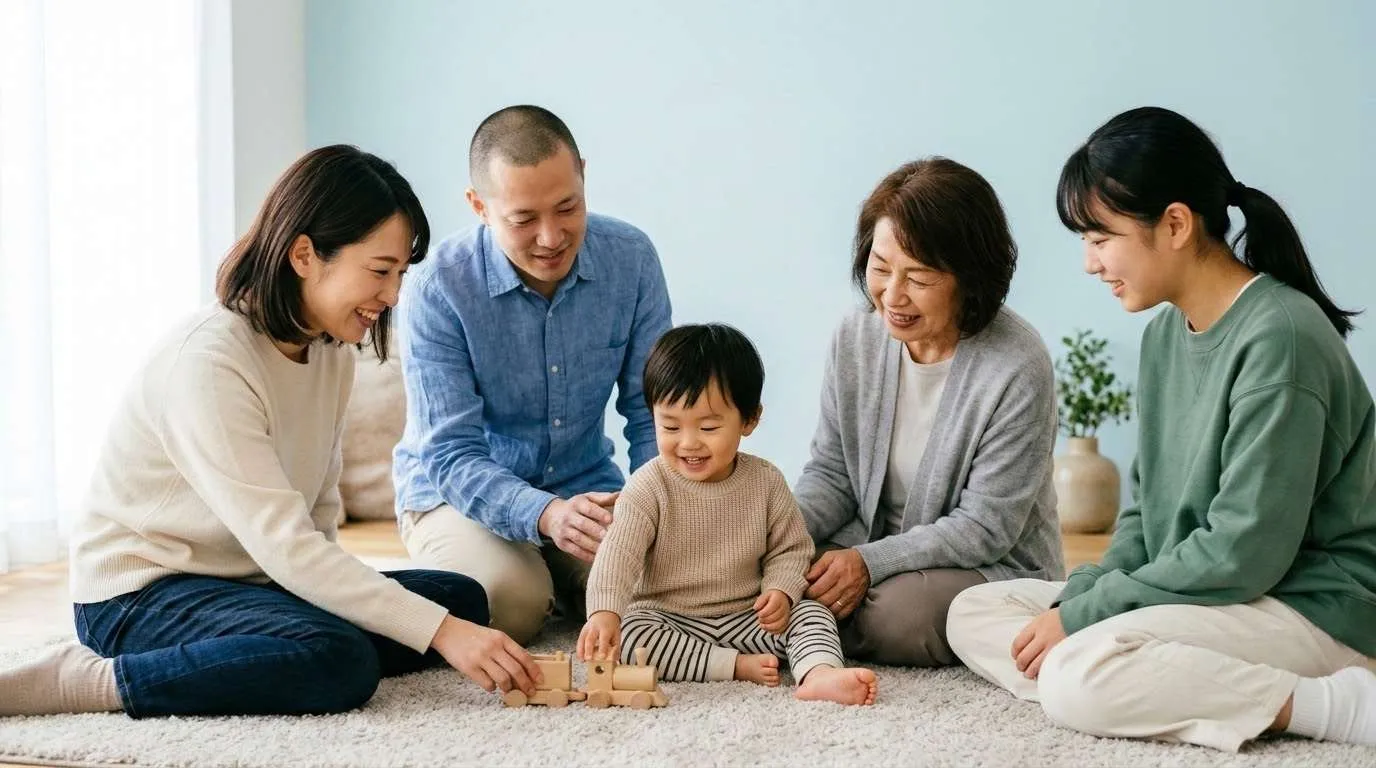
Families are often described through roles. Mother. Father. Grandparent. Sibling. Caregiver. But for a young child, family is experienced differently — not through titles, but through what happens every day. Who responds when they cry. Who stays present through routines, transitions, and uncertainty. On International Day of Families, it is worth remembering that a child's development is rarely shaped by one person alone.
Why does a child's environment matter so much?
In early childhood, the environment is more than a physical space. It includes the people a child sees, hears, depends on, and returns to throughout the day.
Relationships are the 'active ingredients' of the environment's influence on healthy human development.
This is a simple idea with a deep meaning. A child's growth is shaped through repeated moments with the people around them. A child learns what safety feels like through comfort. They learn communication through response. They learn belonging through being included again and again.
Development is not something that happens apart from family life. It is shaped inside it.

What does family support actually look like?
Family support often sounds like something large. But for children, it is usually experienced through smaller repeated moments.
-
A grandparent's patience Listening patiently while a child tells the same story again — giving them the experience of being truly heard.
-
A familiar routine A father keeping a consistent bedtime routine after a long day. Predictability itself becomes a form of care.
-
Inclusion through siblings A sibling helping a younger child feel included during play — offering a different kind of belonging than adults can.
-
Noticing the small things A caregiver recognising when a child is tired, overwhelmed, or overstimulated — and responding before it becomes a crisis.
-
Steadiness during hard moments Family members responding with calm during difficult transitions, giving the child a safe emotional reference point.
These may look ordinary from the outside. But for children, ordinary moments can become the foundation of safety.

Why do children benefit from more than one steady relationship?
A child's world can include many meaningful relationships. A parent may offer comfort. A grandparent may offer patience. A sibling may offer play. A teacher, practitioner, or caregiver may offer guidance.
Each relationship can give the child a different experience of being supported.
Parents, grandparents, and siblings each offer something distinct — emotional safety, patience, and the experience of play and inclusion.
Teachers, practitioners, and caregivers bring structure, developmental knowledge, and new experiences that expand a child's world.

Why does parenting sometimes feel isolating?
Many parents carry the emotional weight of child development quietly. They manage routines. They watch for delays. They respond to behaviour. They think about school readiness, nutrition, screen time, speech, sleep, social skills, and every small sign that something might need attention.
It can start to feel like every outcome depends on them alone.
But child development has never been only an individual responsibility. Families, communities, schools, health workers, and support systems all have a role in helping children grow. When families are supported, children are better surrounded by the kind of care that helps them feel safe enough to grow.

How does support help caregivers stay present?
Caregiving requires emotional energy. When parents and caregivers are tired, stressed, or isolated, even small challenges can feel heavier. Support helps make caregiving more sustainable.
For a child, that steadiness matters. Not because every moment has to be perfect — but because repeated moments become patterns, and patterns become part of how children experience the world.
Why do small interactions matter so much?
Child development is built through repetition.
-
Comfort after overwhelm A child being soothed after becoming distressed learns, through that response, that difficult feelings can be survived and eased.
-
Calm in difficult moments A caregiver responding steadily during a hard moment helps the child co-regulate and build their own capacity for emotional balance over time.
-
Being noticed A family member recognising when a child seems withdrawn — and gently making space — communicates that the child's inner world matters.
-
Unhurried presence A parent sitting beside a child during play without rushing the moment offers the quiet message: you are worth my time.

What does your child need most from family?
Children do not need perfect environments. They need environments where care is steady enough to be felt. The Nurturing Care Framework reminds us that young children need conditions that help them survive and thrive — and for families, those conditions often begin with everyday care.
→ Being listened to
→ Being comforted after distress
→ Being guided without fear
→ Being included in relationships
→ Being supported during difficult moments
A final thought
Children grow through relationships. They grow through the tone of a home. Through familiar routines. Through comfort after distress. Through play, conversation, care, and the repeated experience of being understood.
International Day of Families is a reminder that child development is not carried by one person alone. It is shaped by the people and systems around a child.
When families are supported, children are better surrounded by the kind of care that helps them feel safe enough to grow. And for a young child, that feeling of safety can become one of the most important foundations they carry forward.
- National Scientific Council on the Developing Child. (2004). Young children develop in an environment of relationships. Center on the Developing Child at Harvard University.
- NAEYC. (2020). Developmentally appropriate practice position statement: Principles of child development and learning and implications that inform practice.
- World Health Organization. (n.d.). Nurturing care for early childhood development.
- World Bank. (2018). Nurturing Care Framework for Early Childhood Development launched at 71st World Health Assembly.
- World Health Organization, UNICEF, & World Bank Group. (2018). Nurturing care for early childhood development: A framework for helping children survive and thrive to transform health and human potential.