
Why daily routines matter for toddlers and child development?
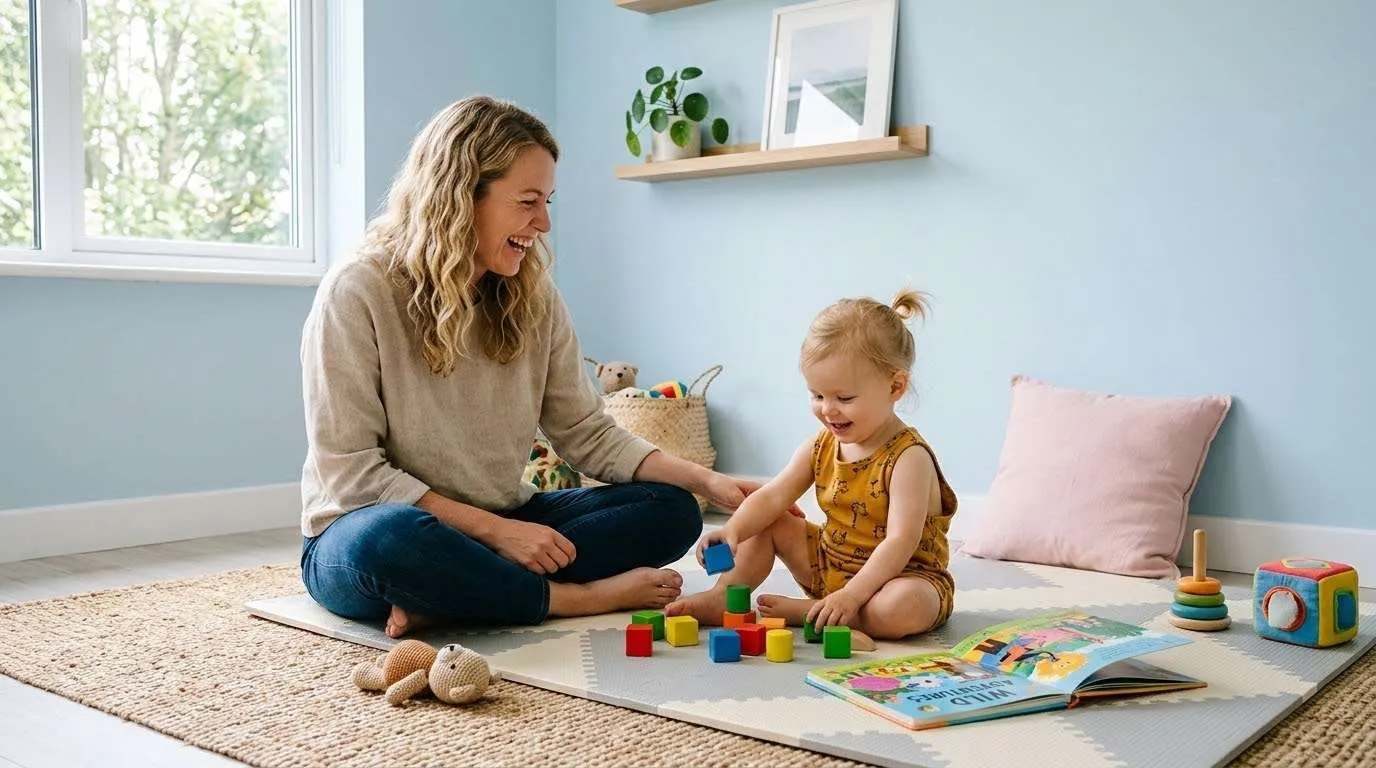
There's a quiet rhythm to early childhood. The same wake-up time. The same transitions. The same small rituals that shape each day. To adults, this repetition may feel unnecessary. But for toddlers, it plays a powerful role. A daily routine for toddlers creates predictability — and predictability is essential for healthy child development.
What do routines actually give a child?
When parents think about routines, they often focus on schedules — meals, naps, bedtime. But child development routines go much deeper than structure.
Routines help children understand what comes next, how events are connected, and where they are in a sequence. Over time, these repeated experiences form patterns. And through patterns, children learn how to anticipate, respond, and engage with their environment.

Why predictability reduces stress and improves learning?
Young children are constantly processing new information. Without structure, every moment requires interpretation — this increases stress. A predictable routine changes that. When children know what to expect, they can focus more on exploration, interaction, and learning.
Studies show that unpredictable environments can affect attention, emotional regulation, and early academic outcomes. This highlights the importance of routine in early childhood development.
When a child understands their world, they are better able to learn, connect, and grow. Routine creates that understanding.
How routines shape behaviour over time?
Behaviour is not built through correction alone — it is built through repetition. When toddlers repeatedly experience calm transitions, consistent expectations, and stable responses, they begin to internalise these patterns.

Children learn to move between activities with less resistance when they know what's coming next.
Stable, repeatable experiences help children develop confidence to manage parts of their day on their own.
This is why consistent routines in child development are so important — they shape behaviour naturally over time, without relying on correction.
Why routines alone are not enough?
Structure without interaction has limits. A routine may be consistent, but without engagement, its impact is reduced. What truly makes routines effective is responsive interaction.
"Routine creates the opportunity. Interaction creates the impact."
— Tiggie TeamResponsive caregiving within a routine supports cognitive development, language skills, emotional regulation, and social growth. These outcomes aren't produced by the schedule itself — they emerge from the quality of what happens within it.
The role of family and caregivers
A child's routine is not built by one person alone. It is shaped by a support system — parents, caregivers or helpers, grandparents, and teachers. When routines are consistent across this circle, children experience stability. When they are inconsistent, routines can feel confusing and fragmented.
Even small consistencies within the home — a bedtime ritual, a familiar phrase before transitions, a regular mealtime interaction — contribute meaningfully to a child's sense of security.
What happens when routines are inconsistent?
When routines are unpredictable, children must constantly adapt. This increases mental load and often shows up as difficulty with transitions, emotional overwhelm, or changes in behaviour. These are not simply "behaviour problems" — they are signs that a child is struggling to find structure.
Behaviour is often a child's way of communicating. Disrupted routines are one of the most common — and most overlooked — causes of emotional dysregulation in toddlers.
Why routines matter most during change?

Routines become especially important during transitions such as starting school, travelling, changes in caregivers, or new environments. Even small consistencies — like a bedtime ritual or a familiar interaction — can provide comfort and stability when everything else feels unfamiliar.
The long-term benefits of routine for children
Repetition may not feel like progress, but in early childhood, it builds the foundation for development. Each repeated experience strengthens familiarity, confidence, and expectation. Over time, this contributes to emotional resilience, behavioural stability, and social development.
This is why the benefits of routine for children extend far beyond daily convenience — they are one of the core building blocks of who a child becomes.
Simple ways to build a daily routine for toddlers
Routines don't need to be perfect or rigid. They just need to be consistent. The goal is to be consistent enough to create patterns, and flexible enough to adapt to your child.
- A predictable bedtime routine — same steps, same order, same calm
- Regular mealtime interactions — conversation, not just food
- Consistent play and learning time — even 20 minutes daily adds up
- Transition cues — a phrase, song, or gesture that signals what's coming
Final thoughts
Routines are not about strict schedules. They are about creating a world your child can understand. And when a child understands their world, they are better able to learn, connect, and grow.
"Development is not built in one moment. It is built — consistently — over time."
— Tiggie TeamBuilding routines isn't always easy — especially when every child develops differently. With Tiggie Kids, you can track developmental milestones, understand what to expect at each stage, get personalised guidance for routines, and connect with specialists when needed.
